By the Vertexweb team. Last reviewed October 2026.
Social media for small charities works best with a simple plan: one or two platforms, a few content themes and a posting routine you can actually keep. Most small charities do not fail on social media because of a lack of ideas. They fail because posting is irregular, messages are unclear and nobody measures what works.
This guide gives you a practical social media strategy for a small charity with limited time. It covers choosing platforms, content pillars, a weekly routine, free tools, safeguarding and consent, and the numbers worth tracking.
Key takeaways
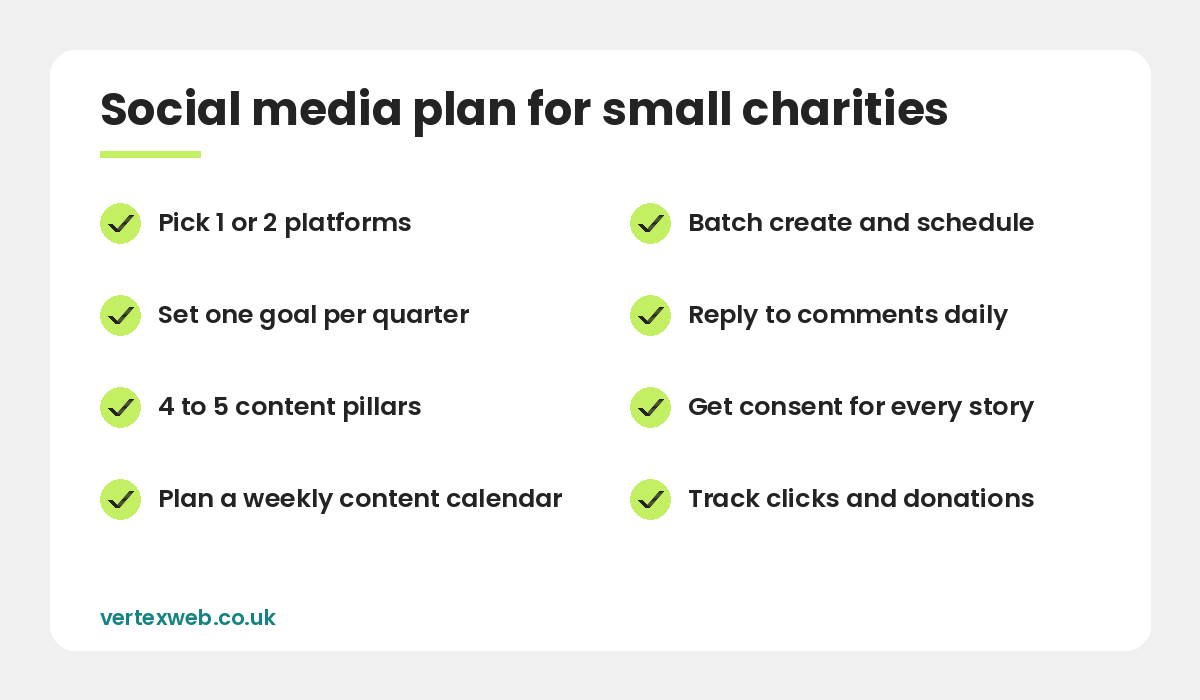
- Choose the one or two platforms where your supporters already spend time.
- Plan around four content pillars: impact, people, ways to help and useful information.
- Post consistently with a simple content calendar and batch your content.
- Always get consent before sharing photos or stories of the people you support.
- Link posts back to your website so social activity becomes donations and sign-ups.
Start with clear goals
Before you post, decide what social media should do for your charity. Typical goals are raising awareness in your area, recruiting volunteers, promoting events, driving donations to appeals and keeping current supporters informed. Pick one main goal per quarter. It makes every other decision easier.
Which platforms are best for social media for small charities?
- Facebook. Still strong for local communities, older supporters, events and birthday fundraisers.
- Instagram. Good for visual stories, behind-the-scenes content and younger supporters. Reels can reach people who do not follow you yet.
- LinkedIn. Useful for corporate partnerships, trustees, funders and staff recruitment.
- TikTok. Great reach for short, authentic videos, but only if you can post regularly.
- WhatsApp. Channels and community groups are an easy way to share updates with volunteers and local supporters.
- YouTube. Best for longer videos, event recordings and evergreen explainers.
You do not need all of them. A small charity is usually better off doing Facebook and Instagram well than six platforms badly.
Content pillars and post ideas
Content pillars are the three to five themes you post about again and again. For most charities they look like this:
- Impact. Stories, numbers and before-and-after examples. “This month 140 families received food parcels.”
- People. Volunteers, staff, trustees and the people you support, with consent. Meet-the-team posts perform well.
- Ways to help. Appeals, volunteer roles, events, wish lists and fundraising challenges.
- Useful information. Tips, signposting and answers to common questions about your cause.
- Community moments. Awareness days, local events, festivals such as Ramadan, Diwali or Christmas, and milestones.
Mix them so you are not always asking for money. A rough guide is that most posts should inform, celebrate or thank, and a smaller share should ask.
A weekly routine that fits a small team
- Monday, 30 minutes. Plan the week in a simple content calendar. Note any events, appeals or awareness days.
- Tuesday, 1 hour. Batch-create graphics and captions. Collect photos and short videos from volunteers.
- Wednesday. Schedule posts for the week with a scheduling tool.
- Daily, 10 minutes. Reply to comments and messages. Quick, friendly replies build trust.
- Friday, 15 minutes. Check what performed best and note one thing to repeat.
Three to four good posts a week is enough for most small charities. Consistency matters more than volume.
Free and low-cost tools
- Canva. Eligible charities can apply for Canva for Nonprofits, which gives free access to premium features.
- Meta Business Suite. Free scheduling and insights for Facebook and Instagram.
- CapCut or Instagram’s built-in editor. For quick, captioned short videos.
- Linktree or a page on your own site. One link in your bio pointing to your appeal, volunteering and newsletter. A page on your own website is better for SEO and tracking.
- Google Analytics 4. Add UTM tags to links so you can see which posts lead to donations.
Consent, safeguarding and tone
Always get written consent before sharing a photo, name or story of anyone you support, and be extra careful with children and adults at risk. Avoid sharing locations that could identify vulnerable people. Write in a respectful, hopeful tone that shows dignity rather than pity. Have a simple social media policy that explains who can post, how to handle negative comments and what to do in a crisis.
What to measure
Likes are nice, but they do not pay the bills. Track:
- Reach and new followers each month.
- Engagement rate: comments, shares and saves.
- Clicks to your website.
- Donations, volunteer sign-ups and newsletter sign-ups from social, tracked in GA4.
Review these monthly and keep doing what works. If you want hands-on help, our social media marketing team works with charities and non-profits.
A simple plan for social media for small charities beats an ambitious one you cannot keep up. For free training and resources, Charity Digital publishes practical guides on social media for small charities and other digital skills.
Common questions
Which social media platform is best for a small charity?
Facebook and Instagram suit most small UK charities because they reach local communities and support fundraising tools. Add LinkedIn for partnerships and TikTok if you can post short videos regularly.
How often should a small charity post on social media?
Three to four good posts a week is enough for most small charities. Consistency matters more than volume.
Can charities get Canva for free?
Eligible charities can apply for Canva for Nonprofits, which gives free access to premium Canva features.
How do we measure social media success?
Track reach, engagement, website clicks and, most importantly, donations and sign-ups from social media using Google Analytics 4 and UTM links.
Do we need consent to post photos of service users?
Yes. Get written consent before sharing anyone’s photo or story, and take extra care with children and adults at risk.
Final thoughts
Good social media for small charities is about focus and consistency, not big budgets. Choose one or two platforms, plan around a few content pillars, post a few times a week, reply to people quickly and link everything back to your website. Combine it with online fundraising ideas and you have a simple, effective marketing plan.
Need a website that turns social traffic into support? Contact us or see our charity website design service.
Related reading
- Charity and non-profit website design
- 15 Online Fundraising Ideas for Small Charities
- Charity Website Checklist: What Your Site Should Include
- Social Media Ideas for Mosques and Islamic Centres
- Social media marketing services
Turn followers into supporters. VertexWeb helps charities plan social content and build websites that convert clicks into donations and volunteers.