

By the Vertexweb team. Last reviewed 4 October 2026.
When a boiler breaks or a tap will not stop dripping, people reach for their phones. They search for a local tradesperson, scan a few results and call the one that looks trustworthy and close by. A good website for tradespeople in the UK makes sure you are one of those results, and that the visitor calls you instead of the next plumber, electrician or builder on the list.
This guide covers what to include on a trade website, from service pages and areas covered to accreditations, photos of finished jobs and quote forms, plus the local search basics that bring in nearby customers.
Key takeaways
- Customers want to know what you do, where you work and whether they can trust you, within seconds.
- Create a separate page for each main service you offer.
- Show accreditations, insurance and guarantees if you hold them.
- Make calling or requesting a quote the easiest thing to do on every page.
- Complete your Google Business Profile and collect genuine reviews to rank locally.
Why tradespeople need a website
Word of mouth is powerful, but today even recommended tradespeople get checked online. A customer who hears your name will often search for you, and if they find nothing or an out-of-date Facebook page, they may hesitate. A website shows that you are established, gives proof of your work and answers common questions before the first call.
It also brings in new customers who have never heard of you. People searching for emergency or planned work choose from what they see on Google, and a clear website with local information gives you a real chance of being chosen.
The pages a trade website needs
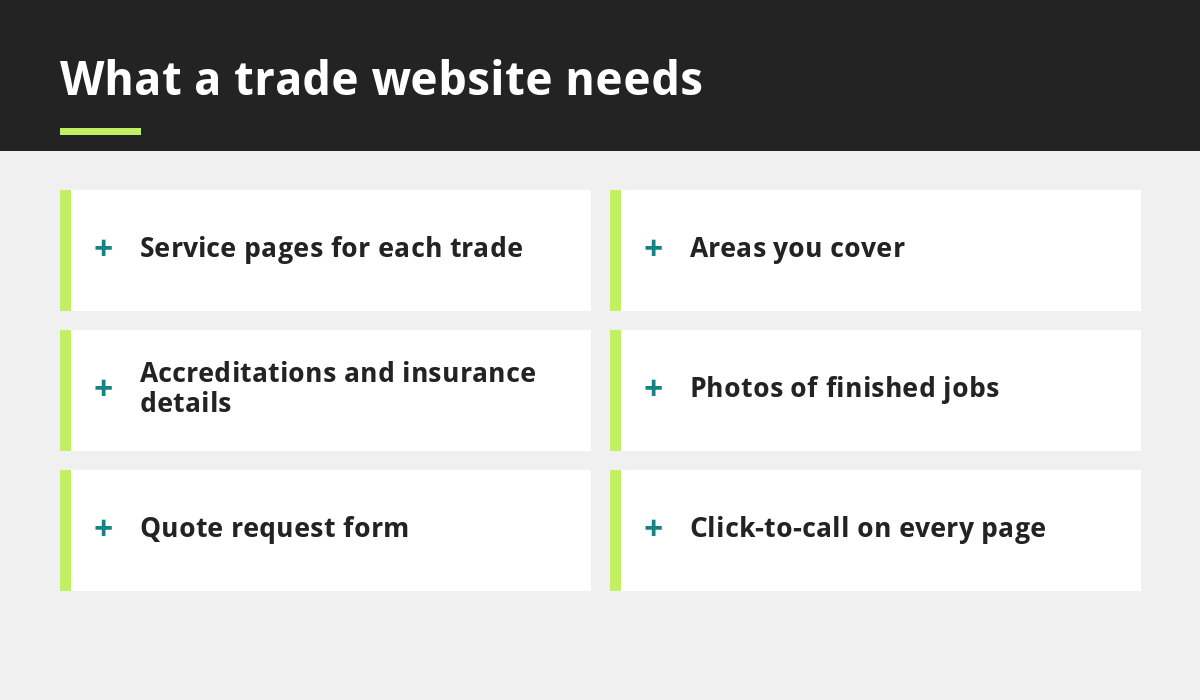
- Homepage: your trade, your area, a phone number and a quote button.
- Services: one page for each main job, such as boiler repair, rewires or extensions.
- Areas covered: the towns and postcodes you work in.
- Gallery or projects: photos of real jobs.
- About: who you are, how long you have worked and what makes you reliable.
- Reviews: genuine customer feedback.
- Contact: phone, email, quote form and opening or response times.
Write a page for each service
Customers search for specific jobs, such as bathroom fitting or electrical safety check, so give each its own page. Explain what the job involves, when people need it, how you work and what the next step is. Use plain words and avoid jargon. Add a few photos and a call to action at the end.
Resist the urge to copy and paste text between pages. Unique, helpful content is better for customers and better for search engines. If you need help writing it, our content making services can support you.
Show the areas you cover
List the towns and neighbourhoods where you work so customers know you are close enough. If you serve several locations, you can add a short page for each main area, with real details such as typical jobs and local landmarks. Avoid creating dozens of near-identical pages, which add little value.
Build trust with accreditations and insurance
Trust is the deciding factor for many homeowners. If you hold relevant accreditations, show them clearly. Depending on your trade, this might include Gas Safe registration for gas work, NICEIC or NAPIT membership for electrical work, TrustMark or other trade association memberships. Only display logos and claims that apply to you, and keep them up to date. Mention that you carry public liability insurance and explain any guarantees you offer.
Photos of real jobs
Before and after photos are among the most persuasive content on a trade website. Take clear, well-lit pictures of finished work, with a short caption describing the job. Ask the customer first if the photos show their home. Compress images so the pages load quickly, as explained in our post on speeding up your website.
Make it easy to call or ask for a quote
Many customers decide in seconds. Put your phone number at the top of every page, make it tap-to-call on phones and add a simple quote form that asks for the essentials: name, phone number, postcode and a short description of the job. Tell people how quickly you usually reply. A WhatsApp link can also work well for customers who prefer messaging.
Win local searches
Most trade searches are local, such as plumber near me or electrician in your town. Set up your Google Business Profile, choose accurate categories and add your service areas. Collect honest reviews after each job and reply to them, using our guide on getting more Google reviews. For a step-by-step walkthrough, read our Google Business Profile guide and how local SEO helps UK businesses. Our SEO services can handle it all for you.
Helpful content brings enquiries
Short guides that answer common questions, such as how to prepare for an electrical inspection or signs a boiler needs repair, show your expertise and bring in visitors who are researching a problem. Keep them practical and honest. Our post on how to write blog posts that rank on Google shows how to plan them.
Common trade website mistakes
- No phone number visible on mobile.
- Only one page that tries to cover every service.
- Stock photos instead of real work.
- Accreditation logos that are out of date.
- No areas listed, so customers are unsure you cover them.
- A slow site that frustrates people in a hurry.
Choosing the right website for your budget
A trade website does not need to be complicated. A handful of well-written pages, strong photos and a clear contact route can do a lot. Before you buy, read our guide to affordable websites and the red flags to avoid, and use our website launch checklist to check your site before it goes live.
Frequently asked questions
Do plumbers and electricians need a website?
Yes. Even if most work comes by recommendation, customers check you online. A website adds credibility and brings in people searching for local help.
What should a tradesperson website include?
Services, areas covered, accreditations, insurance details, photos of real jobs, reviews, and a quick way to call or request a quote.
Should I list prices on my trade website?
Fixed prices are not always possible, but you can explain what affects cost or give guide prices for common jobs. This builds trust and filters out unsuitable enquiries.
How do I get my trade business to show up on Google Maps?
Complete and verify your Google Business Profile, choose accurate categories, add your service areas, keep your details consistent and collect honest customer reviews.
How many pages does a trade website need?
A good starting point is a homepage, a page for each main service, an areas page, a gallery, an about page and a contact page.
Final thoughts
A great website for tradespeople in the UK answers three questions quickly: what do you do, where do you work and can I trust you? Add clear service pages, honest proof of your work and an easy way to call or request a quote, and your website becomes one of the hardest-working members of your team.
If you would like help, talk to our team or see our web development services.
Related reading
- Google Business Profile Optimisation Guide
- How to Get More Google Reviews
- Affordable Website UK: Red Flags to Check Before You Pay
- How to Speed Up Your Small Business Website
Launch offer for UK small businesses. Get a professional website for just £299 a year. Only the first 20 customers, for restaurants, small clinics and small businesses.