By the Vertexweb team. Last reviewed 4 October 2026.
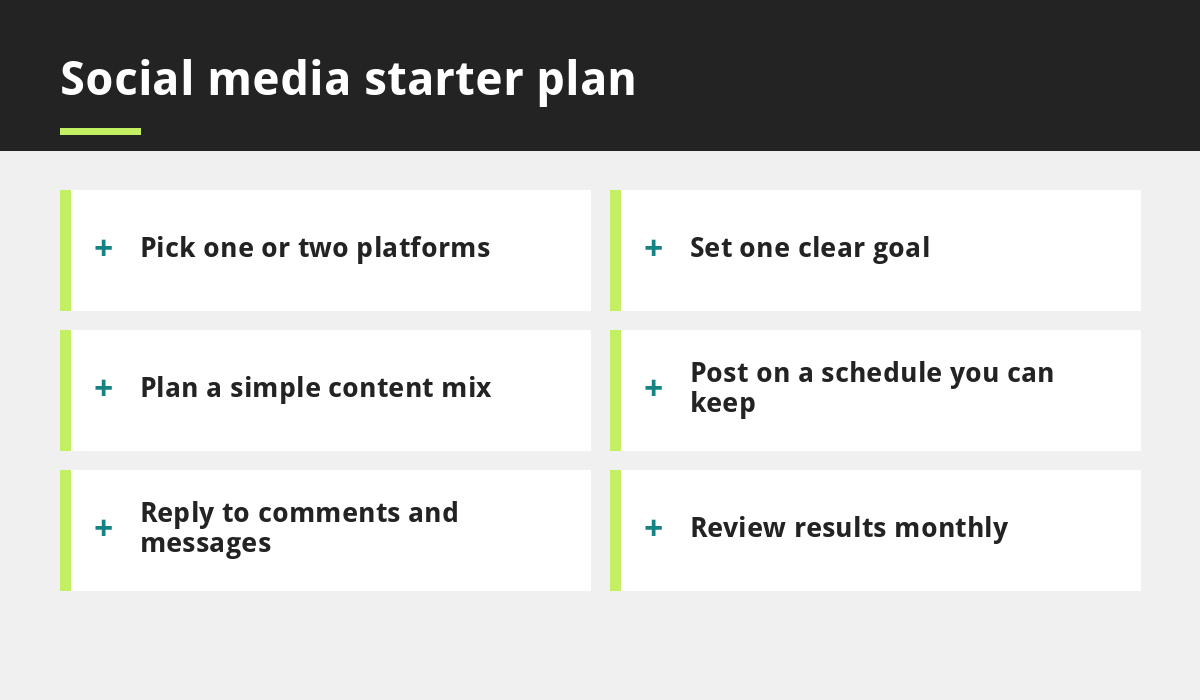
Social media marketing works best for small businesses when it is simple, consistent and tied to a clear goal. You do not need to be on every platform or post every day. You need to be in the right place, show up regularly and give people a reason to follow, trust and choose you.
This beginner’s guide explains how to choose platforms, set a goal, plan content, build a realistic posting routine, engage with followers and measure what works. It is aimed at UK owners of restaurants, clinics, salons, trades and other small businesses with limited time.
Key takeaways
- Start with one or two platforms where your customers already spend time.
- Set one clear goal, such as enquiries, bookings or awareness.
- Mix helpful, personal and promotional posts, with more help than selling.
- A modest, regular schedule beats bursts of activity.
- Link social media back to your website so people can book or enquire.
Choose the right platforms
Each platform attracts different audiences and formats. A rough guide:
- Facebook: local communities, events, older and mixed audiences, reviews and groups.
- Instagram: visual businesses such as food, beauty, interiors and fitness.
- TikTok and short video: behind-the-scenes, tips and personality, often reaching younger audiences.
- LinkedIn: professional services and business-to-business relationships.
- YouTube: how-to content and longer explanations.
Ask your customers where they spend time, and look at where similar local businesses are active. Then commit to one or two.
Set a clear goal
Decide what you want social media to do. Typical goals include more phone calls or bookings, more website visits, more local awareness or more repeat customers. Your goal shapes what you post, which links you include and how you measure success. One clear goal is better than five vague ones.
Plan a simple content mix
A balanced feed might include:
- Helpful posts: tips, answers to common questions and short guides.
- Behind the scenes: your team, your process, your premises.
- Proof: customer stories, results, reviews shared with permission.
- Offers and news: new services, opening hours, events and promotions.
A common approach is to make most posts useful or personal and a smaller share promotional. People follow businesses that give them something worthwhile.
Build a schedule you can keep
Choose a frequency you can sustain for months, for example three posts a week on your main platform. Batch your content: spend an hour each week planning, taking photos and writing captions, then schedule posts using the platform’s tools or a scheduling app. Keep a simple calendar that notes upcoming events, seasonal dates and offers.
Engage, do not just broadcast
Social media is a conversation. Reply to comments and messages quickly, thank people who share your content and join in with local community posts where it is natural. Respond politely to criticism and take detailed complaints offline. Fast, friendly replies make a small business feel reliable.
Connect social media to your website
Social posts disappear quickly, so use them to send people somewhere permanent. Add your website and booking link to your profile, use clear calls to action and make sure your website has the details people look for next. Our article on website vs Google Business Profile vs social media explains how the three work together, and our Google Business Profile guide covers the local side.
Organic or paid social?
Organic posts build familiarity but reach can be limited. Paid social ads let you target by location, interests and behaviour and can help promote offers or events. If you try ads, start with a small budget, one clear goal and one simple offer, and review results before spending more. Our pay per click and social media marketing services can help.
Measure what matters
Check your platform insights monthly. Look at which posts produced profile visits, link clicks, messages, calls or bookings, not just likes. Write down what worked, repeat it and drop what did not. Tie results to your goal.
Common beginner mistakes
- Trying to be on every platform.
- Posting only promotions.
- Going quiet for weeks, then posting five times in a day.
- Ignoring comments and messages.
- Using low-quality or copied images.
- Forgetting to link to your website or booking page.
Strong, consistent branding helps too, as covered in building a strong brand identity.
A simple four-week starter plan
- Week 1: choose your platform, set your goal, update your profile photo, bio and link to your website.
- Week 2: plan and post three pieces of content: one helpful tip, one behind-the-scenes post and one customer story.
- Week 3: repeat, add a short video or photo series, and reply to every comment and message within a day.
- Week 4: review which posts brought profile visits or enquiries, keep the best formats and plan the next month.
By the end of the month you will have a routine and the first data on what your audience likes.
Good practice and UK advertising rules
Be honest and clear about offers, prices and results. If you pay someone to promote your business, or gift products in return for posts, make the relationship obvious, as UK advertising rules expect. Only use images and music you have the right to use, and get permission before featuring customers. Never buy fake followers or reviews. Honest, transparent posting builds the trust that social media is meant to create.
Final thoughts
Start small: choose one or two platforms, set one goal, plan a simple content mix and keep a schedule you can sustain. Reply to people, link back to your website and review results every month. Over time, social media becomes a steady way to build trust and bring in customers.
If you would like support, contact our team.
Related reading
- Website vs Google Business Profile vs Social Media
- Why Content Marketing Is Still the Backbone of Online Growth
- Building a Strong Brand Identity
- Email Marketing Tips That Keep Subscribers Engaged
Launch offer for UK small businesses. Get a professional website for just £299 a year. Only the first 20 customers, for restaurants, small clinics and small businesses.