By the Vertexweb team. Last reviewed 4 October 2026.
Content marketing means publishing genuinely useful information that helps your customers, so that they find you, trust you and choose you. It still works because people continue to research before they buy, and search engines, social platforms and AI assistants all look for clear, helpful answers. For a small business, steady useful content is one of the most affordable ways to build visibility over time.
This guide explains why content marketing remains valuable, which formats suit small businesses, how to plan a simple strategy, how to keep quality high, how to use AI tools responsibly and how to measure results.
Key takeaways
- Useful content builds trust before a customer ever contacts you.
- Start with the real questions customers ask, then answer them clearly and honestly.
- One good article each week or fortnight beats a burst of thin posts.
- Connect every article to a relevant service page or next step.
- Measure enquiries and engagement, not just traffic.
Why content marketing still works
- It builds trust. Answering questions openly shows expertise and honesty before a sale.
- It supports search visibility. Each useful page gives you another chance to appear when people search for what you offer.
- It compounds. A good article can keep attracting visitors for months or years, unlike a single advert.
- It helps sales. Sales conversations are easier when customers have already read your guides and understand your approach.
Content formats for small businesses
You do not need every format. Choose those that suit your skills and customers:
- Blog posts and guides: good for search and detailed answers.
- Service and location pages: explain exactly what you do and where.
- Short videos: useful for demonstrations, behind-the-scenes and FAQs.
- Case studies: real examples of problems solved, with the customer’s permission.
- Email newsletters: keep past customers engaged. See our email marketing tips.
- Social posts: shorter pieces that point back to deeper content, as in our social media beginner’s guide.
Build a simple content strategy
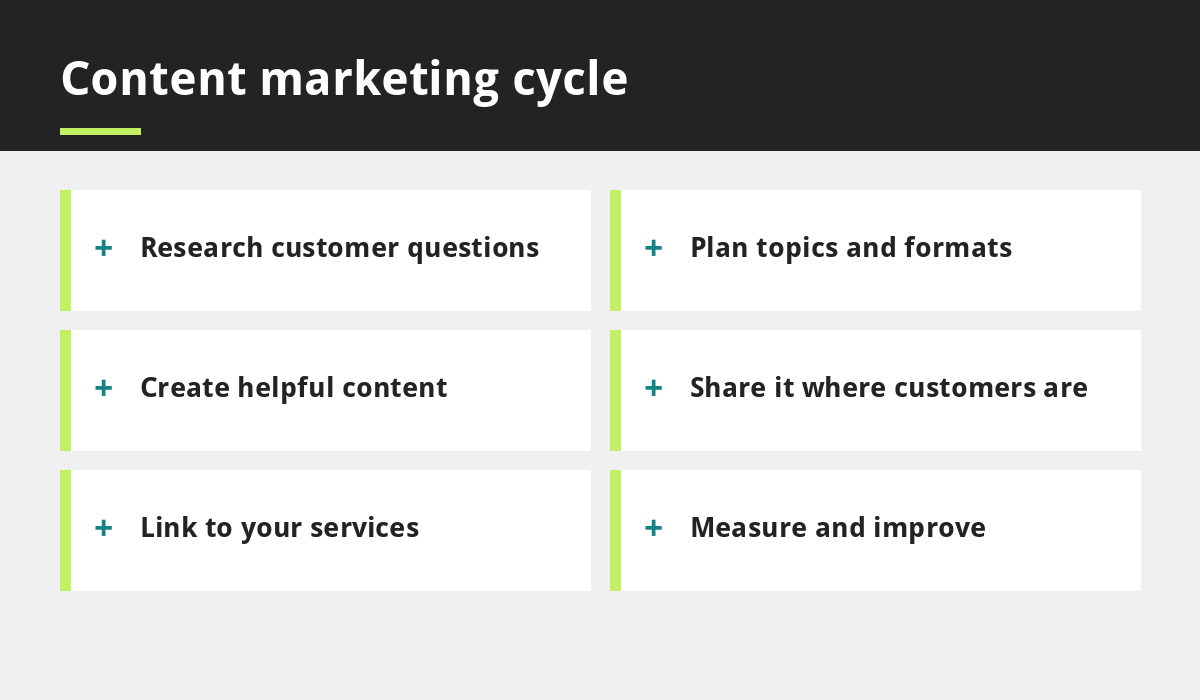
1. Start with customer questions
List the questions customers ask before, during and after they buy. Check your emails, calls and reviews. Each question is a potential article.
2. Group topics into clusters
Choose a few main themes for your business and write a main guide plus several supporting articles on each. For example, a clinic might have a main guide to a treatment, with supporting pieces on preparation, recovery and costs. Linking these together shows search engines and readers how topics relate.
3. Plan a realistic calendar
Decide how often you can publish well, perhaps one article every one to two weeks, and plan the next two months of topics.
4. Add a next step
Every article should lead somewhere useful, such as a related guide, a service page or a contact form.
Keep quality and originality high
Thin, repetitive content does not help customers or search engines. Aim for articles that explain something clearly, include your real experience and examples, and answer likely follow-up questions. Use original photos, processes and numbers from your own work where you have them. Never invent statistics, reviews or credentials. Our guide on how to write blog posts that rank on Google goes through the process in detail.
Using AI tools responsibly
AI tools can help with outlines, first drafts and editing, but they should never replace your knowledge or editorial judgement. Check every fact, add your own experience and rewrite generic wording so it sounds like you. Read our article on how content writers can use AI tools without losing the human touch for a practical approach.
Share and distribute your content
Publishing is only half the job. Share each article on your social channels, in your email newsletter and on your Google Business Profile where suitable. Link to it from relevant pages on your website. Ask partners or local organisations to share it if it helps their audience too.
Measure what matters
Track organic visits to your articles, how long people stay, which pages lead to enquiries and how many calls or forms come from content. Over time, note which topics bring the best customers and create more like them. Update older articles when information changes.
Common content marketing mistakes
- Publishing without knowing the audience’s real questions.
- Writing generic text that could belong to any business.
- Stopping after a few posts.
- Not linking content to services or calls to action.
- Copying competitors instead of adding value.
- Never updating old articles.
Content ideas by business type
- Restaurants and cafes: seasonal menu stories, allergen guides, event announcements, supplier profiles. See our restaurant website guide.
- Clinics: what to expect at a first appointment, preparing for treatment, recovery guides, written carefully and with regulator guidance in mind. See our clinic website guide.
- Salons: hair care routines, style guides, bridal planning timelines. See our salon website guide.
- Trades: maintenance checklists, warning signs, how to prepare for a quote. See our trades website guide.
Common questions
How often should a small business publish content?
Choose a rhythm you can keep up with quality, such as one strong article every one to two weeks. Consistency matters more than volume.
How long does content marketing take to work?
It is gradual. Some articles bring visitors within weeks, but meaningful results usually build over several months as your library and reputation grow.
Do I need a blog on my website?
Not always, but a blog or resources section is one of the best ways to answer customer questions in depth and attract search visitors.
Final thoughts
Content marketing is still the backbone of online growth because it solves a simple problem: customers want clear answers from businesses they can trust. Plan around real questions, publish consistently, keep quality high, link every piece to a next step and measure the results.
Our content making services can help you plan and produce it, or you can contact us to talk it through.
Related reading
- How to Write Blog Posts That Rank on Google
- How Content Writers Can Harness AI Tools
- A Beginner’s Guide to Social Media Marketing
- Email Marketing Tips That Keep Subscribers Engaged
Launch offer for UK small businesses. Get a professional website for just £299 a year. Only the first 20 customers, for restaurants, small clinics and small businesses.